
Education
TVET Second Batch Opens at MOUAU, Trainees Charged to Stay Focused

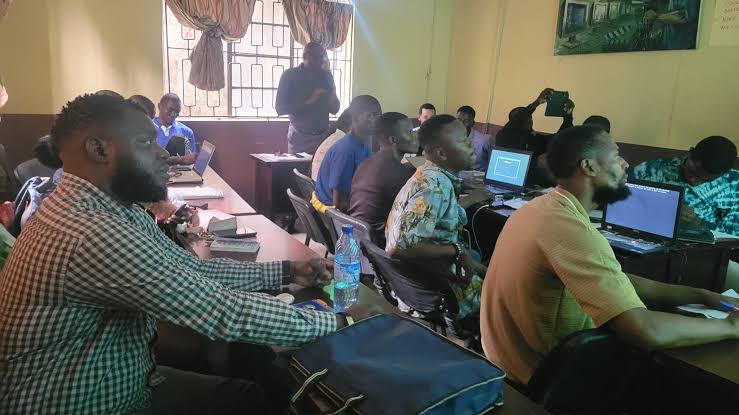

The second batch of the Federal Government’s Technical and Vocational Education and Training (TVET) Programme has commenced at the Michael Okpara University of Agriculture, Umudike (MOUAU), with participants urged to remain focused and take full advantage of the opportunity to acquire practical skills for self-reliance.
Speaking during the induction ceremony held at the university’s Entrepreneurship Development Centre, the State Coordinator of the programme, Mr. Kunle Paul Joshua, said the initiative was designed by the Federal Government of Nigeria to equip Nigerian youths with marketable technical and vocational skills capable of reducing unemployment and promoting entrepreneurship.
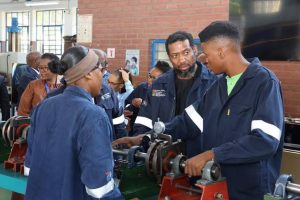
Joshua explained that the programme offers training across several skill areas, including leather making, electrical installation, welding and fabrication, beauty therapy and cosmetology, carpentry and woodwork, plumbing and pipe fittings, furniture making and upholstery, among others.
According to him, the training programmes are structured to run for six months for short-term skill courses and up to one year for full vocational education training.
He advised the trainees, who were drawn from different parts of Abia State, to take the programme seriously and avoid distractions that could hinder their progress.
“The Federal Government designed this programme to empower young Nigerians with practical skills that will enable them become independent and self-employed. Participants must therefore focus on their respective cohorts and deploy their strengths in learning the skills,” Joshua said.
Also speaking at the event, the Director of the Centre for Entrepreneurship Development at MOUAU, Prof. K. C. Ekekwe, urged the participants to see the training as a turning point that could reshape their future.
Ekekwe noted that vocational skills remain a powerful tool for economic empowerment, stressing that many successful entrepreneurs today started with similar training opportunities.
“You must see a future in the skills you are acquiring here. What you learn in this programme can become a game changer in your life if you take it seriously and apply yourselves diligently,” he said.
The induction programme featured interactive sessions between the trainees and their instructors, allowing participants to gain a clearer understanding of the structure, expectations, and opportunities within the programme.
One of the trainees, who spoke anonymously, commended the organisers and the Federal Government for the initiative, describing it as a valuable opportunity for young people seeking sustainable livelihoods.
He assured that the participants were eager to learn and ready to absorb the knowledge that would be imparted during the course of the programme.
The trainee, however, appealed to the Federal Government to provide safety kits and starter packs for the participants as stipulated in the programme guidelines.

According to him, the provision of such materials would not only support effective learning but also protect trainees from potential hazards associated with some of the technical skill areas.
The TVET initiative is part of the Federal Government’s broader strategy to promote vocational education, encourage entrepreneurship, and equip Nigerian youths with practical skills needed to thrive in today’s competitive economy.
