
WORLD NEWS
U.S. Lawmakers Submit Nigeria Persecution Report to White House, Propose Sanctions and Security Pact


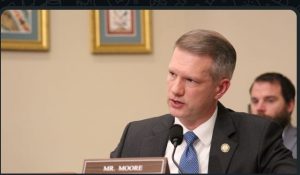
The United States House Committees on Appropriations and Foreign Affairs have formally submitted a comprehensive report to the White House detailing findings and policy recommendations on the alleged persecution of Christians in Nigeria.
The submission follows President Donald Trump’s decision to redesignate Nigeria as a Country of Particular Concern over religious freedom violations.
The President had directed Congressman Riley Moore and Chairman of the House Appropriations Committee, Tom Cole, to spearhead a detailed investigation into the reported persecution of Christian communities and the broader security crisis confronting Africa’s most populous nation.
Moore confirmed the report’s formal presentation in a statement shared Monday evening, noting that the document was the product of months of bipartisan inquiry.
As part of the probe, Moore led a congressional delegation on a fact-finding mission to Nigeria. The team visited Internally Displaced Persons (IDP) camps in Benue State, met with victims of extremist violence, and held high-level consultations with Nigerian officials led by the National Security Adviser, Nuhu Ribadu.
According to Moore, the report draws from extensive investigative efforts, including expert hearings, roundtable discussions, consultations with religious leaders, meetings with displaced persons, and two on-the-ground assessments conducted by bipartisan delegations.
The inquiry was also carried out in close collaboration with the Trump administration.
“Today, members of the House Committees on Appropriations and Foreign Affairs formally presented a comprehensive report outlining concrete actions to end the persecution of Christians in Nigeria and counter growing extremist violence in the region,” Moore stated.
The report outlines a series of far-reaching recommendations. Chief among them is the establishment of a bilateral U.S.–Nigeria security agreement designed to protect vulnerable Christian communities and dismantle jihadist networks operating within the country.
It also proposes withholding certain U.S. funds until Nigeria demonstrates measurable progress in halting violence against Christians.
In addition, lawmakers recommended targeted sanctions and visa restrictions against individuals and groups found responsible for or complicit in religious persecution.
The report further calls for enhanced technical support to assist Nigerian authorities in curbing violence linked to armed Fulani militias.
Other proposals include urging the repeal of Sharia and blasphemy laws deemed inconsistent with international religious freedom standards, as well as expanding cooperation with key international partners such as France, Hungary, and the United Kingdom.
Moore said the U.S. delegation now possesses what he described as a clear understanding of the security dynamics in Nigeria and the alleged targeting of Christian communities.
He called on the Nigerian government to seize what he termed a pivotal opportunity to strengthen bilateral ties with Washington.
“Our brothers and sisters in Christ have suffered in silence for too long. The world is now watching,” Moore said.
“I urge the Nigerian government to deepen and strengthen its relationship with the United States.
Together, we must address these pressing security challenges and bring an end to violence against Christians.”
The White House has yet to publicly outline its next steps, but the report is expected to shape future U.S. policy engagement with Nigeria on security and religious freedom issues.
